
Tony Jaa
Thai martial artist who brought Muay Thai to global cinema.

Wikipedia / Wikimedia Commons
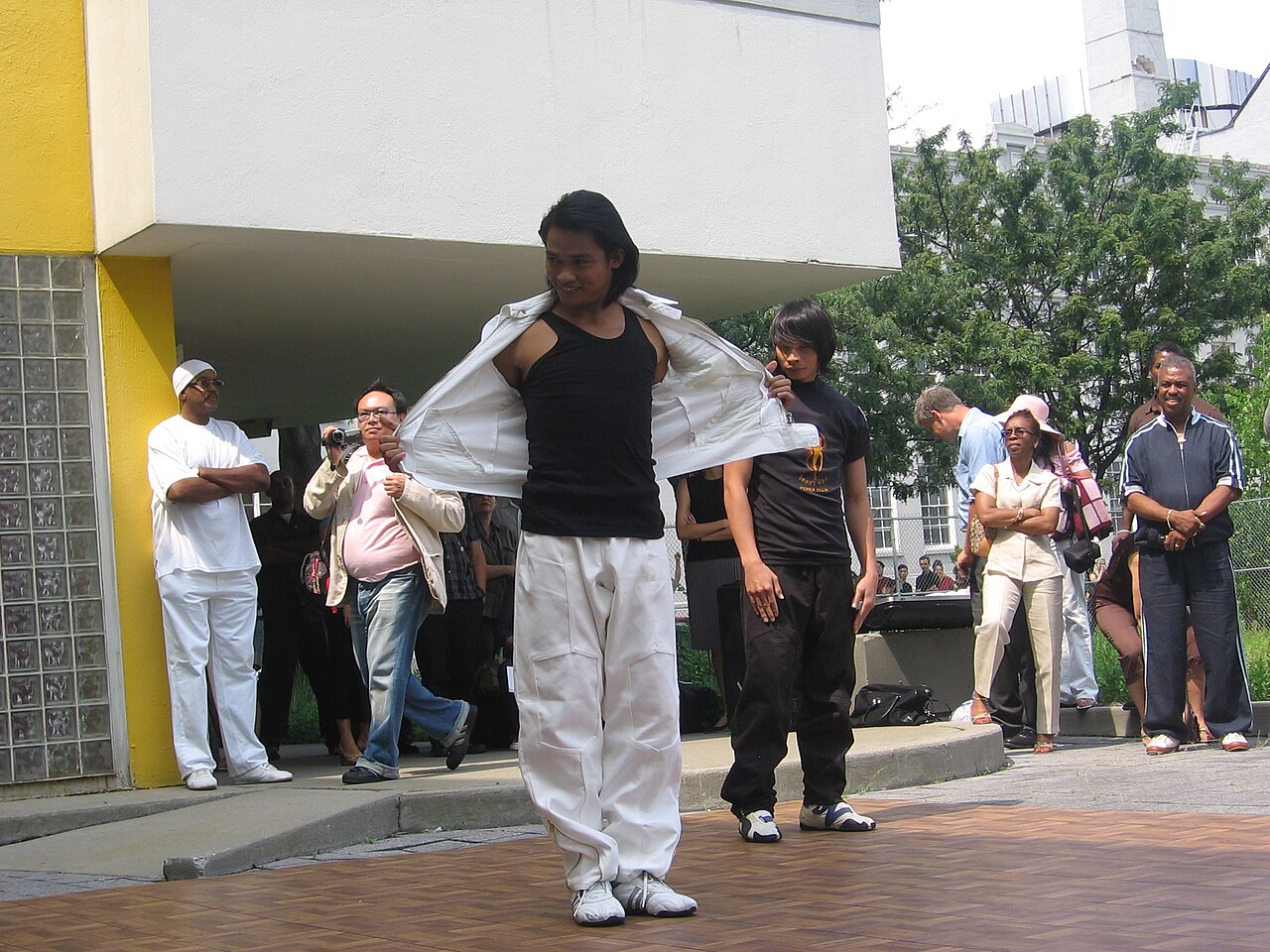
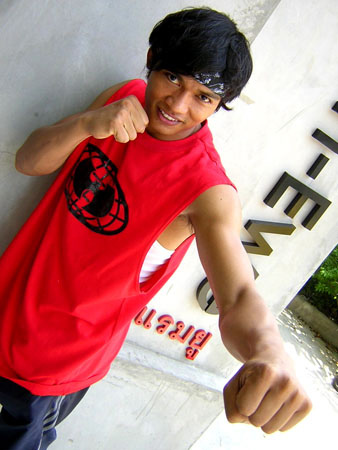
Tony Jaa (born Tatchakorn Yeerum, 1976) is a Thai martial artist, actor, action choreographer, stuntman, and director. He gained international recognition for his explosive martial arts stunt work, beginning with his breakthrough role in the 2003 film Ong-Bak. Jaa is widely considered one of the greatest martial arts stars in cinema history and is credited with helping establish the Thai action genre worldwide.
- born
- February 5, 1976
- died
- N/A
- field
- Martial arts, acting, stunt work, directing
- nationality
- Thai
- known_for
- Ong-Bak (2003), Tom-Yum-Goong (2005), Furious 7 (2015), popularizing Muay Thai and Muay Boran in cinema
Lore & Background
Tony Jaa was born on February 5, 1976, and raised in a rural area in Surin Province. Inspired by Bruce Lee and Jackie Chan films he watched at temple fairs, he began training in Muay Thai at age 8 and later fought professionally as a Muay Thai fighter. Filmmaker Panna Rittikrai discovered him at a temple fair and asked him to do stunts. Jaa worked as a stuntman for Muay Thai Stunt for 14 years, doubling for Sammo Hung in a commercial and appearing in Thai television series Insee Daeng (Red Eagle).
Jaa's breakthrough came with Ong-Bak (2003), in which he performed all stunts without mechanical assistance or computer-generated effects, suffering injuries including a ligament injury and a sprained ankle. He went on to star in Tom-Yum-Goong (2005) and directed and starred in Ong Bak 2 (2008) and Ong Bak 3 (2010). His first English-speaking role was in Furious 7 (2015), and his Hong Kong debut was SPL II: A Time for Consequences (2015). Other notable films include XXX: Return of Xander Cage, Paradox (both 2017), Master Z: Ip Man Legacy (2018), Triple Threat (2019), and Detective Chinatown 3 (2021).
Reader's Guide
Tony Jaa's significance lies in his role as a global ambassador for Thai martial arts. His films, which have grossed over $2.7 billion worldwide, popularized Muay Thai, Muay Boran, and the fighting style 'Muay Kotchasaan' (developed with Panna Rittikrai in 2005). Jaa's insistence on performing his own stunts without CGI or mechanical aids set a new standard for authenticity in action cinema. He was inducted into the Martial Arts History Museum Hall of Fame in 2017. His work inspired other martial arts stars, including Jackie Chan, who recommended Jaa for a role in Rush Hour 3 (though scheduling conflicts prevented participation). Jaa's legacy includes establishing the Thai action genre internationally and influencing a generation of action filmmakers.
Did You Know?
- Tony Jaa began training in Muay Thai at age 8 and fought professionally at temple fairs.
- He performed all stunts in Ong-Bak (2003) without mechanical assistance or computer-generated effects.
- Jaa was inducted into the Martial Arts History Museum Hall of Fame in 2017.
- His films have grossed over $2.7 billion worldwide.
Roots in the Rice Paddy
Born on February 5, 1976, in rural Surin Province to Rin Saipetch and Thongdee Yeerum, Tatchakorn Yeerum (formerly Phanom Yeerum) grew up watching Bruce Lee and Jackie Chan films projected at temple fairs. Those screenings left such a lasting impression that he began mimicking their moves in his father's rice paddy, repeating each technique until he could replicate it exactly. He also drew inspiration from Jet Li and Donnie Yen. At age ten he started Muay Thai training at his local temple, and his early martial-arts education spanned Taekwondo, Muay Boran, Krabi-Krabong, gymnastics, and track and field. He went on to fight professionally at temple fairs as a Muay Thai fighter, where filmmaker Panna Rittikrai spotted him and invited him into the world of cinema. Panna later guided him to earn a bachelor's degree from Maha Sarakham College of Physical Education. Before ever stepping in front of a camera as a lead, Jaa spent fourteen years as a stuntman with Muay Thai Stunt, doubling for Sammo Hung in an energy-drink commercial involving an elephant and appearing in the Thai television series Insee Daeng.
The Ong-Bak Breakthrough
In 2003, Jaa's years of stunt work culminated in his first lead role as Ting in Ong-Bak, a film born from a four-year collaboration between Jaa and Rittikrai exploring Muay Boran, the ancient predecessor of modern Muay Thai. They produced a short demonstration with instructor Grandmaster Mark Harris, which caught the eye of producer-director Prachya Pinkaew and led to the full feature. Jaa performed every stunt himself without mechanical rigs or computer-generated effects, delivering a style of extreme acrobatics and rapid, dance-like combat that audiences had never seen on screen. The physical toll was real: he suffered a ligament injury and a sprained ankle during production. In one memorable sequence he fought while his own trousers were ablaze, burning his eyebrows, eyelashes, and nose before the crew called for additional takes. The film earned him a Star Entertainment Award and ignited a global phenomenon. Two sequels followed—Ong Bak 2 (2008) and Ong Bak 3 (2010)—both of which Jaa directed himself, bringing the franchise trilogy to a close.
From Thailand to the World
After Ong-Bak, Jaa's career accelerated across borders. In 2005 he starred as Kham in Tom-Yum-Goong, a role he reprised in the 2013 sequel, and in 2006 he traveled to New York to promote The Protector, appearing at the Museum of the Moving Image. By the mid-2000s, dubbed versions of his films were reaching audiences through theatrical releases, television broadcasts, and on-demand platforms, establishing him as a global action icon. His 2015 English-language debut in Furious 7 and his Hong Kong debut in SPL II: A Time for Consequences marked significant milestones. He went on to appear in XXX: Return of Xander Cage and Paradox (both 2017), Master Z: Ip Man Legacy (2018), Triple Threat (2019), and Detective Chinatown 3 (2021). Jackie Chan, one of Jaa's childhood heroes, actively lobbied director Brett Ratner to cast him in Rush Hour 3, calling him the most well-rounded of all action stars. Jaa ultimately passed due to scheduling conflicts with Ong Bak 2. His films have collectively grossed over $2.7 billion worldwide.
Shaping a Genre
Tony Jaa is widely regarded as one of the greatest martial arts stars in cinema history, and his influence extends well beyond box-office numbers. He is credited with helping establish the Thai action genre on the world stage and with popularizing combat systems that many international audiences had never encountered: Muay Thai, Muay Boran, and Muay Kotchasaan, a hybrid fighting style he and Rittikrai developed together in 2005. His films showcased a remarkable breadth of disciplines—Kung-Fu, Judo, Aikido, Silat, and Jiu-Jitsu—woven into choreography noted for its speed and innovation. The fact that he performed his own stunts, often without safety nets or digital enhancement, gave his work a visceral authenticity that resonated globally. Even before his breakthrough, his fourteen years of stunt work, including doubling for Sammo Hung and appearing in Insee Daeng, laid the groundwork for a career that would redefine what audiences expected from action cinema. His legacy is not merely a filmography but a movement that brought Thai martial arts into the global conversation.
Gallery
Frequently Asked Questions
Who is Tony Jaa?
Tony Jaa, born Tatchakorn Yeerum on February 5, 1976, is a Thai martial artist, actor, stunt performer, action choreographer, and director. He became a global name after his breakout role in the 2003 film Ong-Bak.
What fighting styles does Tony Jaa use on screen?
Jaa is best known for showcasing Muay Thai and the older Thai art of Muay Boran in his fight sequences. His physically demanding, acrobatic choreography helped bring both disciplines to international audiences.
What are Tony Jaa's most famous movies?
His breakthrough was Ong-Bak (2003), followed by Tom-Yum-Goong (2005), both of which became huge hits outside Thailand. He also appeared in the Hollywood blockbuster Furious 7 (2015).
Why is Tony Jaa considered important in action cinema?
He is widely regarded as one of the greatest martial-arts screen stars ever and is credited with putting the Thai action genre on the world map. His work proved that Southeast Asian stunt-driven filmmaking could compete with and influence global action movies.
Does Tony Jaa do anything behind the camera?
Yes—beyond performing stunts and acting, Jaa has served as an action choreographer and has directed his own projects. This multi-hat approach lets him control how his signature fight sequences are designed and shot.
More in International Film Stars 1-17
Spotted an error? Know more?
This is a living reference — every entry is fact-audited, and reader corrections feed straight into our audit queue. Suggest an edit · See this site's audit record