
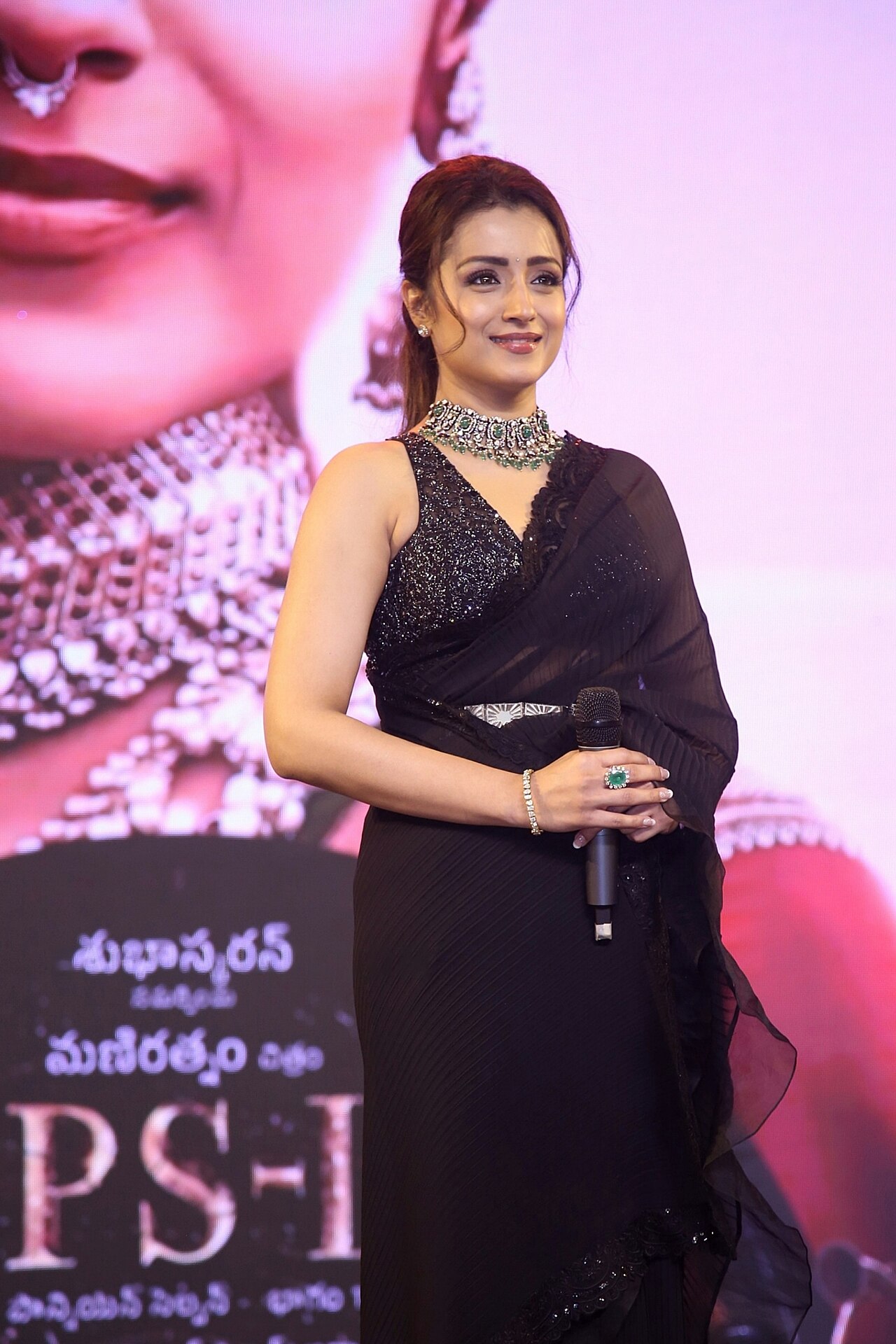
Trisha Krishnan
Indian actress with over two decades in Tamil and Telugu cinema.

Wikipedia / Wikimedia Commons
Trisha Krishnan (born 4 May 1983) is an Indian actress who works mainly in Tamil and Telugu films. She is among the highest-paid actresses in India and has remained a leading figure in Tamil cinema for more than twenty years. Often called the "Queen of South India," she has won five Filmfare Awards South, a Tamil Nadu State Film Award, and a Nandi Award.
She began her film career with a small supporting role in the Tamil romantic drama *Jodi* (1999), after winning the Miss Chennai pageant that same year. Her first lead role came in *Mounam Pesiyadhe* (2002). She became a star through commercially and critically successful Tamil films like *Saamy* (2003), *Ghilli* (2004), *Aaru* (2005), and *Unakkum Enakkum* (2006), as well as Telugu hits such as *Varsham* (2004), *Nuvvostanante Nenoddantana* (2005), *Athadu* (2005), *Aadavari Matalaku Ardhalu Verule* (2007), and *Krishna* (2008). For her Telugu work, she won three Filmfare Awards for Best Actress – Telugu and a Nandi Award for Best Actress – Telugu.
Trisha made her Hindi film debut with *Khatta Meetha* (2010), her Kannada debut with *Power* (2014), and her Malayalam debut with *Hey Jude* (2018). Her critically praised performances include the comedy drama *Abhiyum Naanum* (2008), the romantic drama *Vinnaithaandi Varuvaayaa* (2010), the action thrillers *Yennai Arindhaal* (2015) and *Thoongaa Vanam* (2015), the political thriller *Kodi* (2016), the romantic drama *'96* (2018), the historical dramas *Ponniyin Selvan: I* (2022) and *Ponniyin Selvan: II* (2023), and the crime thriller series *Brinda* (2024). Her roles in *Abhiyum Naanum*, *Kodi*, and *'96* earned her the Tamil Nadu State Film Award, the Filmfare Critics Award for Best Actress – Tamil, and the Filmfare Award for Best Actress – Tamil, respectively. Her highest-grossing film to date is the action thriller *Leo* (2023).
**Early life**
Trisha Krishnan was born on 4 May 1983 in Madras, Tamil Nadu, to Krishnan and Uma, in a Tamil Palakkad Iyer family. She attended Sacred Heart Matriculation School in Church Park, Chennai, and later studied for a Bachelor of Business Administration (BBA) at Ethiraj College for Women, Chennai. She started modelling and appeared in print ads and TV commercials. In 1999, she won the "Miss Salem" beauty pageant and later the same year, the Miss Chennai contest. She also received the "Beautiful Smile" award at the Miss
- born
- 4 May 1983
- field
- Actress
- nationality
- Indian
- known_for
- Work in Tamil and Telugu cinema; five Filmfare Awards South
Lore & Background
Trisha Krishnan was born on 4 May 1983 to Krishnan and Uma in Madras, Tamil Nadu into a Tamil Palakkad Iyer family. She completed her schooling from Sacred Heart Matriculation School in Church Park, Chennai, and later pursued a Bachelor of Business Administration (BBA) course at Ethiraj College for Women, Chennai. She ventured into modelling and appeared in several print and television commercials. In 1999, she won the 'Miss Salem' beauty pageant, and later the same year, the Miss Chennai contest. She also won the Miss India 2001 pageant's 'Beautiful Smile' award. Trisha had aspired to become a criminal psychologist initially, and resisted the thought of pursuing acting, as she wanted to complete her studies first. In 2000, she appeared in Falguni Pathak's music video Meri Chunar Udd Udd Jaye alongside Ayesha Takia. She was later approached for an acting role in the Tamil film Lesa Lesa (2003) by Indian film director Priyadarshan, which marked the beginning of her professional career as an actress.
Reader's Guide
Trisha Krishnan gained prominence after winning the 1999 Miss Chennai pageant, which marked her entry into cinema. After debuting with a minor supporting role in the Tamil romantic drama Jodi (1999), she had her first lead role in Mounam Pesiyadhe (2002). She rose to fame starring in commercially and critically successful films such as Saamy (2003), Ghilli (2004), Varsham (2004), and Nuvvostanante Nenoddantana (2005). Her performances in Abhiyum Naanum (2008), Vinnaithaandi Varuvaayaa (2010), Yennai Arindhaal (2015), Thoongaa Vanam (2015), Kodi (2016), '96 (2018), Ponniyin Selvan: I (2022), Ponniyin Selvan: II (2023), and the crime thriller series Brinda (2024) received critical acclaim. Her highest-grossing release to date is the action thriller film Leo (2023). Trisha made her Hindi cinema debut in Khatta Meetha (2010), her Kannada cinema debut with Power (2014), and her Malayalam cinema debut with Hey Jude (2018).
Did You Know?
- Trisha won the 1999 Miss Chennai pageant, which marked her entry into cinema.
- She initially aspired to become a criminal psychologist before pursuing acting.
- Her performance in Nuvvostanante Nenoddantana (2005) earned her a Nandi Award for Best Actress – Telugu.
- Her highest-grossing release to date is the action thriller film Leo (2023).
From Supporting Roles to Stardom
Trisha Krishnan first appeared on screen in 1999, taking a small supporting part in the film Jodi. The following year she lent her face to a music video for Falguni Pathak's track "Meri Chunar Udd Udd Jaye," but her path to the top of the billing was not immediate. The project she initially accepted as her lead debut, Priyadarshan's Lesa Lesa, suffered a long release delay, so her true first lead role arrived in 2002 with Ameer's directorial debut Mounam Pesiyadhe, a film that proved a solid commercial hit. The next year brought two very different challenges: in Manasellam she portrayed a woman fighting a terminal illness, while in Hari's action picture Saamy she played a soft-spoken Brahmin girl. Saamy's major critical and commercial triumph opened the floodgates of high-budget offers. When Lesa Lesa finally reached theatres, it earned her the ITFA Best New Actress Award. Though her 2003 releases Alai and the bilingual Enakku 20 Unakku 18 underperformed, the 2004 Telugu film Varsham became a landmark, delivering her first Filmfare Award for Best Actress in Telugu and cementing her status as a bankable star across two major industries.
A Trail of Critical Honours
Trisha Krishnan's filmography is punctuated by a remarkable string of acting accolades spanning both Tamil and Telugu cinema. Her early recognition included the ITFA Best New Actress Award for Lesa Lesa, followed by the Filmfare Award for Best Actress in Telugu for Varsham in 2004. The 2005 romantic comedy Nuvvostanante Nenoddantana, in which she played a village girl, brought her a second Filmfare Best Actress trophy along with a Nandi Award. In 2007, Aadavari Matalaku Arthale Verule secured her third Filmfare win. The following year, her performance in Abhiyum Naanum was widely praised and earned her the Tamil Nadu State Film Award plus a Filmfare nomination. Later career highlights include a Filmfare Critics Award for the political thriller Kodi in 2016, a Filmfare Best Actress (Tamil) win for the period drama '96 in 2018, and back-to-back Filmfare nominations for her portrayal of Princess Kundavai in both Ponniyin Selvan: I (2022) and its 2023 sequel. Additional nominations came for Vinnaithaandi Varuvaayaa, Endrendrum Punnagai, and her Hindi debut Khatta Meetha, where she was considered for Best Female Debut.
Crossing Language Borders
While Trisha Krishnan is anchored in Tamil and Telugu cinema, she is distinguished as one of the few South Indian actresses to sustain a leading-lady career for more than two decades in Tamil film. Her willingness to cross linguistic boundaries has been a defining feature of her trajectory. In 2010 she made her Hindi debut with Khatta Meetha, a film that drew mixed critical reception and performed as an average at the box office, yet still earned her a Filmfare nomination for Best Female Debut. She expanded further with the 2014 Kannada film Power, a commercial success, and in 2018 stepped into Malayalam cinema with Hey Jude. Bilingual productions have also been a recurring thread: Enakku 20 Unakku 18 (also released as Nee Manasu Naaku Telusu), Thoongaa Vanam / Cheekati Rajyam, and Nayaki / Nayagi all allowed her to reach dual audiences simultaneously. She reprised her village-girl role from Nuvvostanante Nenoddantana in the Tamil remake Unakkum Enakkum (2006). More recently, her 2024 web series Brinda, in which she played a police officer, and her 2025 Malayalam film Identity demonstrate that her range continues to stretch well beyond the traditional Tamil-Telugu circuit.
Enduring Relevance and Recent Milestones
Trisha Krishnan's later career has been marked by both nostalgic callbacks and bold new territory. The 2010 romantic drama Vinnaithaandi Varuvaayaa is widely regarded as her career breakthrough, and in 2020 she returned to the character of Jessi in the short film Karthik Dial Seytha Yenn, offering a fresh narrative perspective on the same role. The 2022 epic Ponniyin Selvan: I, in which she portrayed the historical figure Princess Kundavai, earned critical acclaim and a Filmfare nomination, a distinction she repeated with the 2023 sequel. That same year, the action thriller Leo became one of the highest-grossing South Indian films of 2023. In 2024, the 2004 hit Ghilli was re-released for its twentieth anniversary and emerged as one of the highest-grossing re-released Indian films. She also made a special appearance in The Greatest of All Time, captivating audiences with the dance number "Matta." Looking ahead, her 2026 Tamil film Karuppu, opposite Suriya, emerged as a major box office success, while a brief appearance opposite Paal Dabba in the album song PsiloVibin showed her willingness to experiment across formats.
Gallery





Frequently Asked Questions
Who is Trisha Krishnan?
Trisha Krishnan is an Indian actress born on 4 May 1983 who has spent over two decades working primarily in Tamil and Telugu cinema. She is consistently ranked among the highest-paid actresses in India.
What are Trisha Krishnan's most notable awards?
She has collected five Filmfare Awards South, along with a Tamil Nadu State Film Award and a Nandi Award. These honors underscore her lasting influence on South Indian cinema.
How did Trisha Krishnan start her acting career?
After winning the Miss Chennai pageant in 1999, she took on a small supporting part in the Tamil romantic drama Jodi that same year. Her first lead role arrived in 2002 with the film Mounam Pesiyadhe.
Why is Trisha Krishnan called the 'Queen of South India'?
The nickname reflects her more than twenty years as a leading figure in Tamil cinema and her standing as one of the industry's top-earning actresses. It signals the sustained box-office and cultural impact she has maintained across two decades.
Which languages does Trisha Krishnan work in?
She performs mainly in Tamil and Telugu films throughout her career. Her body of work spans both industries, making her a familiar face to audiences across South India.
More in International Film Stars 1-17
Spotted an error? Know more?
This is a living reference — every entry is fact-audited, and reader corrections feed straight into our audit queue. Suggest an edit · See this site's audit record